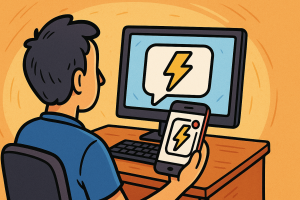
Publishers now need to learn how to redefine reach — shifting away from third-party platform distribution toward their own control. This article explains what a modern distribution strategy needs to look like in 2025.

1. Why Google Is No Longer the Primary Distribution Channel
Changed user behavior:
-
Questions are no longer “googled” but entered into AI systems (e.g., ChatGPT, Perplexity, Gemini).
-
Results appear as direct answers — without a click path to the source.
-
The Top 10 SERP is no longer a traffic guarantee.
At the same time:
-
Discover and News traffic fluctuates heavily and is curated algorithmically.
-
AI models draw on publishers’ content — without compensation and without generating clicks.
Conclusion:
Google remains important, but no longer reliable. Anyone who relies on it alone will lose.
2. Paradigm Shift: From Pull Traffic to Push Publisher
The days of passive “being found” are over. Now the rule is:
➡️ If you want reach, you have to actively generate it.
That means: not just publishing content — but distributing it. And doing so through channels that aren’t dominated by third-party platforms.
3. Overview of New Distribution Channels
1. WebPush
💥 Directly onto the user’s screen – independent of email or SEO✅ Excellent for breaking news, specials, and debates
📉 Caution: Performance depends heavily on segmentation and frequency
2. Newsletter – the new homepage equivalent
📬 Regular relationship building with high open rates🧠 Ideal for curated content, opinions, and exclusive material
👤 Personalized newsletters perform better than mass emails
Tools: Substack, Sendinblue, Mailchimp, Revue (discontinued), beehiiv
3. WhatsApp & Telegram Channels
📲 Especially popular with younger audiences🎯 Content reaches users “in the flow” of their daily lives
🧩 Platform integration into paid channels is possible
4. Plattformjournalismus bewusst steuern
🌐 LinkedIn, X, Flipboard, Medium – Platforms as distribution partners, not just sources of reach💡 Only post content that drives back to your own offerings
🚧 Platform activity ≠ a reach strategy. It is just one part of it.
5. Mobile Apps & Notifications
📱 App users are particularly loyal🔔 Notifications grab attention effectively
⚙️ Effort is worthwhile only with a large user base or a niche positioning
6. Niche Communities and Content Seeding
🧵 Reddit, forums, Discord – often underestimated but highly relevant 📌 Introduce content strategically, engage in discussions, establish brand voice 🗨️ Especially recommended for specialized topics (Tech, Gaming, Sustainability)4. Building an Editorial Distribution Strategy
What many editorial teams are missing:✔️ A clear distribution plan for each piece of content
✔️ A clear audience identity for each channel
✔️ Repurposing content according to platform logic
✔️ Monitoring across all channels (KPI-driven) Recommended Structure:
| Content Type | Primary Channel | Amplification | Goal |
| Breaking News | WebPush, Telegram | Twitter/X, News-App | Faster attention |
| Opinion/Analysis | Newsletter, LinkedIn | Medium, Clubmodell | Brand engagement |
| Guides / How-tos | SEO, Reddit | Pinterest, TikTok Snippets | Longtail-Traffic |
| Exclusive Stories | Paywall + Newsletter | WebPush, Social | Lead generation / Paid |
5. Automation and AI-Powered Distribution
🎛️ Content distribution can be automated today:-
- AI can adapt headlines for each channel
- Tools like Buffer, Later, StoryChief, or Echobox help with channel-optimized distribution
- GPTs can create distribution plans based on topics and target audiences
- A/B testing via push channels or social media
An investigative article is published as: – Article on the website – Deep dive in the newsletter – Quote post on LinkedIn – Audio summary in the podcast – Discussion starter on Telegram
6. Reach ≠ Visibility: New KPIs for Distribution Performance
Forget pageviews as the sole measure of success.New metrics:
-
- Owned Subscribers (Newsletter, App, Push)
- Engagement Rate (comments, shares, replies)
- Time spent on formats (podcasts, longreads, club content)
- Conversions into leads or members
- Quality of dialogue in communities or comments
Summary Box: The New Distribution Strategy in 7 Steps
1️⃣ Don’t blindly follow Google — but don’t prioritize it anymore2️⃣ Think in push rather than pull logic
3️⃣ Build your own channels like newsletters & push professionally
4️⃣ Distribute editorial content like a product launch
5️⃣ Use platforms consciously as distribution tools
6️⃣ Automate distribution processes, but maintain editorial control
7️⃣ Define new KPIs — and measure success differently Autor: Ulf Heyden
Preview of Part 5 of the Series:
From Editorial to Product: Why Publishers Now Need to Think Like Startups